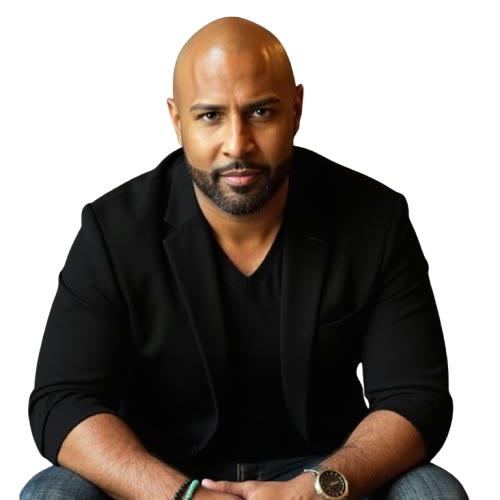
Stephen Oommen has 25 years of go-to-market experience across Microsoft, ADP and Outreach, and he now runs The Referral Effect, coaching sellers and sales leaders on turning relationships into revenue. He left an executive role, and the 70 to 80 hour weeks that came with it, to be a full-time father and build something of his own. That business cleared multiple six figures and turned a profit in its first year, and by his own estimate roughly 98% of the revenue across his entire career has come from relationships and warm referrals. His TEDx talk passed 700,000 views within about a month of release.
This is the first Founder Led episode of Sales Success Stories, a new lane for founders who are still doing the selling themselves. Stephen lays out the three things he credits for making the jump work: financial stability built before he needed it, confidence earned through failure rather than optimism, and a network he had spent 25 years investing in. He gets specific about the mechanics too, including the eight to twelve lead sources he runs, why communities are the most slept-on of them, how he multithreads an enterprise account, and the one question he asks in almost every conversation. He also takes the story back to where it started, growing up as one of the few minorities in his Oklahoma school, learning to adapt in order to survive, and later reclaiming the word chameleon as the empathy that now drives his referrals.
This episode was sponsored by: Nooks

Nooks – The agent workspace for intelligent outbound. Boost pipeline with AI agents that engage prospects across calls, email, social and more.
What We Covered:
[00:40] Why this episode breaks the format, and what a Founder Led lane is
[01:39] The listener question that started the whole lane
[06:22] His top three, and the background you need for them to make sense
[07:02] The one-word answer he gave when asked what gave him the courage
[07:31] Financial stability as the thing that frees up creativity and risk
[08:28] Confidence from experience, not optimism
[09:12] Why the network is the third, and the segue into everything else
[10:54] How they got connected, from both directions at once
[11:52] The TEDx talk, and its hockey stick
[13:08] Leaving an executive role to be a full-time father
[13:57] The coach question that reframed everything: what are you good at?
[14:20] Public speaking, sales and leadership, and being told all three are monetizable
[14:36] The 98% realization about where his revenue actually came from
[16:51] Scott on what a top 1% founder even looks like
[17:38] Year one: multiple six figures, and profitable
[19:14] The second measure of the 1%, which is time, not money
[20:45] Both of them at ADP, once upon a time
[21:10] Selling for someone else versus selling as the product yourself
[22:59] Why rejection lands exponentially harder when it is your own keynote
[23:31] The first sale, and the audition that produced it
[24:53] Where The Referral Effect came from: breaking his experience into frameworks
[25:44] Messaging clarity, and the first real client
[26:23] Ask for money and you get advice, ask for advice and you get money
[26:45] The exact text he sent his network after leaving
[28:22] Why a referral is a trust test, and what a no actually tells you
[29:35] The thing sales leaders get wrong about referrals
[31:51] Why big organizations are structured badly for referrals
[32:46] Multithreading, and referrals as an internal motion
[34:57] Scott’s AI bullet: put the AI in back so the human can be in front
[36:10] How he actually uses AI, and the 80% of his business it runs
[38:40] The eight to twelve lead sources he runs
[38:56] What nurturing a network looks like as a weekly practice
[40:47] Lead passing and the 50/50 split, and what most companies get wrong
[41:14] The Bank of America and Wells Fargo example of a relationship you cannot bill
[44:48] Connecting a client into a new industry, and what that is worth
[48:15] Communities as the most slept-on lead source
[48:49] Shared identity, and selling into an industry where he had zero connections
[51:45] The 92/11 gap, and a client taken from 0% to 53%
[52:45] Principles scale, tactics don’t
[54:59] Manipulation versus persuasion, and why the answer is intent
[58:11] Territories that got bled dry, and why leadership decides it
[59:04] How top sellers interview a territory before they take it
[59:28] Scott on his own move, and backchanneling his way into the answer
[1:02:01] Every role but the first came through a relationship
[1:02:35] Duck on water, and what this show tries to look at underneath
[1:03:24] Trong Nguyen’s parlay, and knowing the business better than they do
[1:05:01] Metacognition, and thinking about how you think
[1:05:28] The introvert’s event tactic: find one person, then ask one question
[1:06:27] The magic question, in its condensed form
[1:07:13] Mark Schaefer, the hour he paid for, and how it came full circle
[1:09:07] Scott’s event hack: catch the speakers before they speak
[1:10:49] Why most founders fail, and it is not the idea
[1:11:47] Scott’s Inspiration Squared, and reputation as what you are seen doing
[1:15:23] The three words he is teaching his sons
[1:16:02] The velvet hammer, and getting the room to laugh
[1:17:13] The reputational revenue system, and his four Rs
[1:19:22] 2007: President’s Club, then living out of his car
[1:20:06] Showering at the gym while starting the next business
[1:20:50] A $40 class, a $40,000 loan, and paying back every penny
[1:21:33] The DVD vending machine
[1:22:06] Oklahoma, and being one of the few minorities in the school
[1:22:34] Being read as African American, and actually being South Indian
[1:24:12] Adapting to survive, and how that became the superpower
[1:25:52] Taking back the word chameleon, and the keynote named after it
[1:26:18] Empathy as the mechanism, and who he cannot help
[1:28:21] His contrarian advice for anyone thinking about going founder
[1:29:28] The three wrong reasons to start, and the one good one
[1:32:18] On the claim that coaches could not hack it in corporate
[1:33:28] Employee, entrepreneur, employee, entrepreneur
[1:35:56] Why dollars per hour is the metric that actually matters
[1:37:15] Why those who cannot do teach is an unfair claim
[1:38:40] The basketball question that explains why coaching is a different job
[1:40:32] Past results, different variables, and the one constant
[1:41:09] Curiosity and humility as the two things nobody lists
[1:41:51] What he would do differently: build in public from day one
[1:43:22] Zero LinkedIn inbound, and what that means for founders
[1:45:08] Founders have to do outbound, and outbound is more than prospecting
[1:46:03] Pricing, and the things nobody warns a first-time founder about
[1:46:46] What he wants at the end, and the 10,000 people
[1:47:57] Scott’s own founder story, and his first client via a referral
[1:50:18] The challenge: the magic question, and the follow-up that matters more
[1:51:21] Where to find everything, and the Summit in October
Quotes:
“I have failed way more than I’ve succeeded, way more.” (00:08:28)
“How many successes do you have to have to be called a success?” (00:08:49)
“92% of customers say they would refer their seller, but only 11% of sellers ever, ever ask.” (00:51:45)
“Principles scale, tactics don’t.” (00:52:45)
“If you write out the tactics of manipulation and the tactics of persuasion, they’re identical.” (00:55:11)
“Who’s the most influential person that knows you well that you highly respect?” (01:06:31)
“So that’s why I call it a reputational revenue system.” (01:17:13)
“It was to take back the word chameleon.” (01:25:52)
“Previous success or failures is not indicative of future success.” (01:40:32)
“I would’ve built in public. I didn’t want to admit that I was starting at the bottom again.” (01:41:51)
Resources Mentioned:
Stephen Oommen’s TEDx Talk: How to Build a Reputation That Gets You Job Referrals
Known by Mark Schaefer
Episode 25: Trong Nguyen on Enterprise Sales Success at Microsoft
Episode 62: Scott Ingram, Inspiration Squared
2026 Sales Success Summit, October 12 and 13 in Austin
Connect with Stephen Oommen on LinkedIn
Sales Success Stories is part of the Sales Success Media family hosted by Scott Ingram